
It’s 10.15 on a Tuesday and you’re on slide nine of the team briefing. You’ve explained why things are changing, shown everyone the new structure in neat little boxes and talked them through the dates.
You’ve also had individual conversations about what it means for each person. You’ve answered questions, discussed concerns and agreed what support people need.
One colleague says, “Yes, I understand. I’m happy with that.”
Lovely. You can focus on the people who are finding it harder.
But how do you know that person will still feel the same once the change actually happens?
I had an interesting reminder of this recently. Naturally, it involved me having considerably more insight into someone else’s reactions than my own.
You’d think someone might have warned me
Every year, when the nights draw in, my husband Matt’s mood drops with the temperature. Without fail, he looks out of the window and says, in a melancholy voice, “I can’t believe it’s winter again.”
Every year, I’m tempted to say, “Do you remember last November?” Of course, I just nod and keep my sarcasm to myself.
I couldn’t understand how something so predictable could have such an impact. I mean, come on! It’s not like he didn’t know it was happening. Why is it such a surprise now winter’s here?
Anyway, Matt’s started a new job.
After being a stay-at-home dad, he’s now at work two days a week, from seven in the morning until five in the afternoon. I’d known about it for weeks. I could have drawn you a timetable.
And now it’s happening, I can’t believe how much it’s affecting me.
You’d think someone might have warned me.
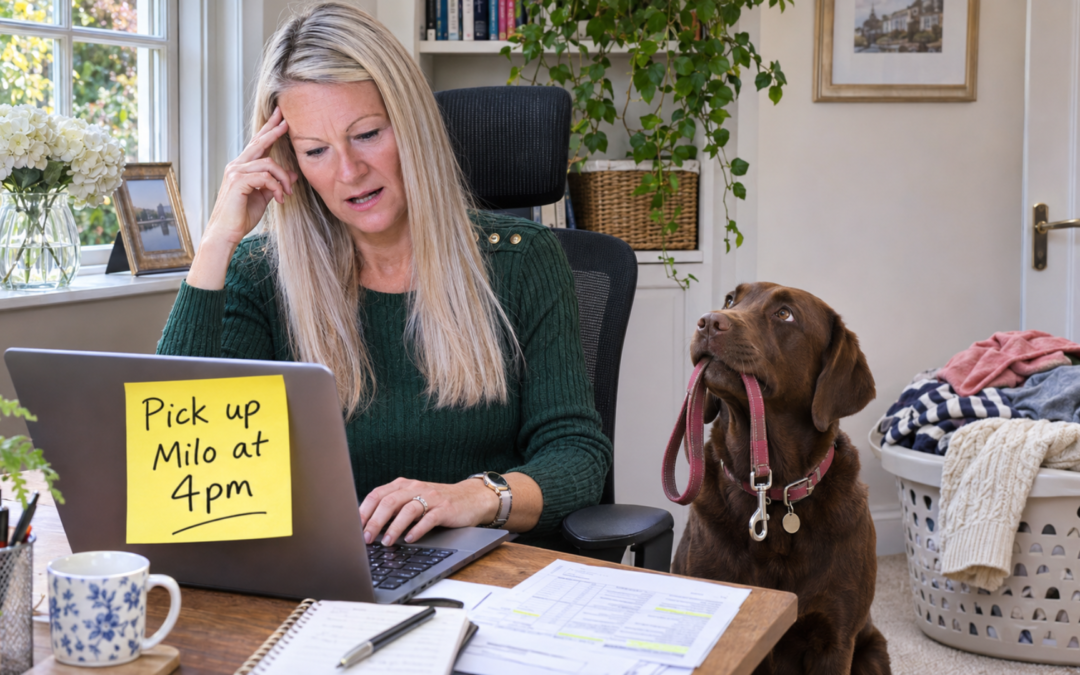
I knew I took his contribution for granted. Matt keeps things running at home so I can get on with running the business. The shopping, walking Cookie, the washing, the washing up, the school runs, the after-school club runs, the cooking. I knew he did all of it. Apparently, I hadn’t fully appreciated what would happen when he wasn’t there to do it.
He’s loving being back in paid work and embracing his exciting new chapter. I’m pining for the good old days, by which I mean last week.
I’d expected the practical adjustments. I hadn’t expected to feel quite so unsettled.
Two boxes ticked. Everyone ready?
At work, when helping people through change, there are two things we rightly give attention to.
First, the concrete details. What’s changing, why it’s happening, when it starts and how it will work.
Then, the personal implications. What does it mean for this person? What are they worried about? What support might help?
Those conversations are important. A person worried about their job needs clarity about what’s been decided. Someone already overwhelmed may need you to agree what can wait. Someone facing an unfamiliar task might need training, coaching or time to practise to build their confidence.
But once we’ve explained the plan and explored the personal impact, it’s tempting to think we’ve ticked both boxes and we can move on. Especially when someone tells us they’re fine.
What they’ve told us is how they feel about the change before they’ve experienced it.
I would have told you I was pleased about Matt’s job, understood the arrangements and had thought through what it meant for me. All true. Apparently, my emotional response hadn’t read the timetable.
Go back to the people who seemed ready
Once a change is under way, people have information they couldn’t fully access beforehand.
Someone who was confident about a new role might discover how much they miss having an experienced colleague nearby. Someone who welcomed a new system might find that taking longer over familiar tasks leaves them feeling surprisingly inadequate. Someone who agreed to a new working pattern might discover the practical arrangements work perfectly well, but they feel more isolated than they expected.
They may hesitate to mention it because they already told you they were happy. They might even think they ought to be coping better.
If you concentrate only on those who expressed concerns at the start, you can miss the person who seemed ready and is now quietly struggling.
One thing to try
When you’re planning a change, put a follow-up conversation in the diary for once it’s under way – including with the people who say they’re fine.
Once they’ve had a chance to experience it, ask:
“Now that it’s happening, what’s been different from what you expected?”
Give them room to reconsider their earlier answer. If something is proving difficult, follow up with:
“What would help, and what can we do about that?”
Their answer might reveal something neither of you could have put on slide nine – and give you an opportunity to do something about it.
As for Matt, I think I owe him a bit more sympathy next November. I gather it’ll be dark again.