
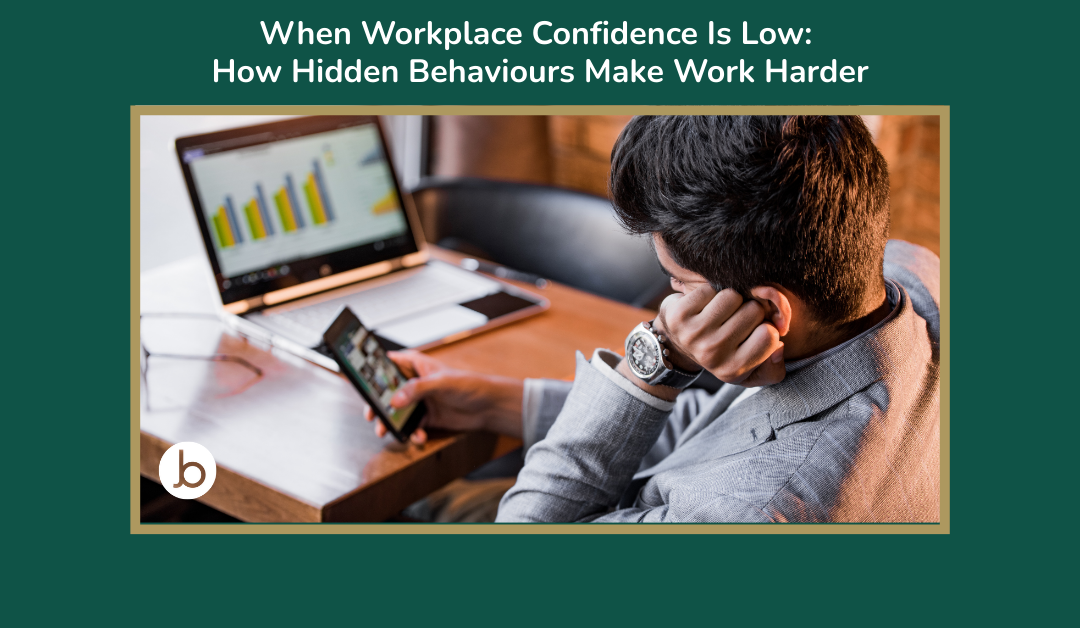
Most people think “low confidence at work” only looks like shyness or being quiet in meetings.
But in reality? Low confidence affects how you communicate, how you make decisions, how you set boundaries and how you handle pressure – often without you realising confidence is the root cause.
This article explores what low internal confidence actually feels like for you as a team member, the hidden behaviours it creates, and how building genuine confidence can make work feel lighter, calmer and more in your control.
Why Low Confidence Is Hard to Recognise in Yourself
Low confidence rarely announces itself. It doesn’t say: “Hi, I’m self-doubt. I’ll be ruining your week.” Instead, it disguises itself as:
- frustration
- overthinking
- people-pleasing
- perfectionism
- avoidance
- emotional reactions
- burnout
Psychologists call these ‘compensatory behaviours’ – the brain’s way of protecting itself from discomfort or perceived threat. But at work, these behaviours quietly drain energy, slow progress and damage relationships.
So let’s explore three very common patterns team members experience.
- When You React Strongly (and Regret It Later)
Jordan’s Perspective
A change is announced at work and something inside you tightens: frustration, worry, maybe fear. Before you’ve had time to process it, emotion takes the wheel so you fire off a long email, which shares your concerns. You send it to your manager and cc in the whole team and your manager’s manager. It feels powerful in the moment, but hours later, you think:
- Why did I react like that?
- Did I overdo it?
- Could I have handled that differently?
The truth? This isn’t confidence. It’s fear disguised as force because real workplace confidence looks like:
- asking questions early
- speaking privately to your manager
- expressing your concerns calmly and clearly
- not needing an audience to feel heard
If you’ve ever felt embarrassed, misunderstood or disconnected after reacting strongly, you’re not alone. It’s one of the most common – and most misunderstood – signs of low confidence at work.
- When You Say “Yes” to Everything… Until You Burn Out
Priya’s Perspective
You want to be helpful, dependable and you don’t want to disappoint anyone so you say “yes” even when:
- your workload is already full
- you’re stressed or stretched
- you need support but don’t want to ask
Over time, the pressure builds and you feel overwhelmed, but don’t know how to say so. Eventually, calling in sick feels like the only way to cope. Not because you’re unreliable, but because you’ve been carrying too much alone for too long.
This isn’t laziness. This isn’t weakness. This isn’t a lack of resilience. It’s low confidence in setting boundaries and communicating workload – a confidence skill almost no one is taught.
When internal confidence strengthens, boundaries stop feeling scary. They start feeling responsible.
- When You Overthink Everything
Chris’s Perspective
You’re good at what you do. Really good, but you:
- redo work multiple times
- struggle to share drafts
- avoid making decisions until you’re 100% sure
- polish things far beyond “good enough”
You call it “high standards”, but inside, it feels like:
- fear of mistakes
- fear of judgement
- fear of looking incapable
This is perfectionism and perfectionism is not a personality trait. It’s a protective response to low confidence. When you build genuine internal confidence, the fear reduces. You feel able to move faster, trust yourself sooner, and stop working twice as hard for the same outcome.
How Low Confidence Impacts You (Not Just the Team)
Low workplace confidence creates a personal toll:
- anxiety
- overthinking
- exhaustion
- difficulty saying no
- feeling behind
- fear of feedback
- frustration with yourself
- low self-esteem
Most people think they need to be tougher, more resilient, louder or more assertive, but confidence isn’t a personality upgrade. It’s a skillset.
The Good News: Confidence Can Be Developed
When you understand the mechanics of workplace confidence – self-awareness, emotional regulation, assertive communication, boundaries, courage skills – everything gets easier.
Jordan stops reacting and starts communicating clearly.
Priya says “no” when she needs to and stays well at work.
Chris moves faster, trusts himself more and stops overworking.
And you? You feel more grounded, more capable, and more in control of your working life. Work stops feeling like survival and starts feeling like progress.
Where to Go Next if You Want More Confidence at Work
If you’re ready to build confidence from the inside out – the kind that changes how you show up, communicate, lead yourself and manage pressure – explore The Confidence Breakthrough tools.
👉 https://joblakeleytraining.co.uk/for-individuals/
It’s built specifically for early-career professionals and team members who want to feel more capable, assertive and balanced in their roles.
Final Thought: You Don’t Need to Become a Different Person
You don’t need louder confidence. You don’t need fake confidence. You don’t need to get rid of fear. You just need confidence that starts on the inside – with skills and awareness that make every part of work feel easier.
Small shifts.
Major impact.